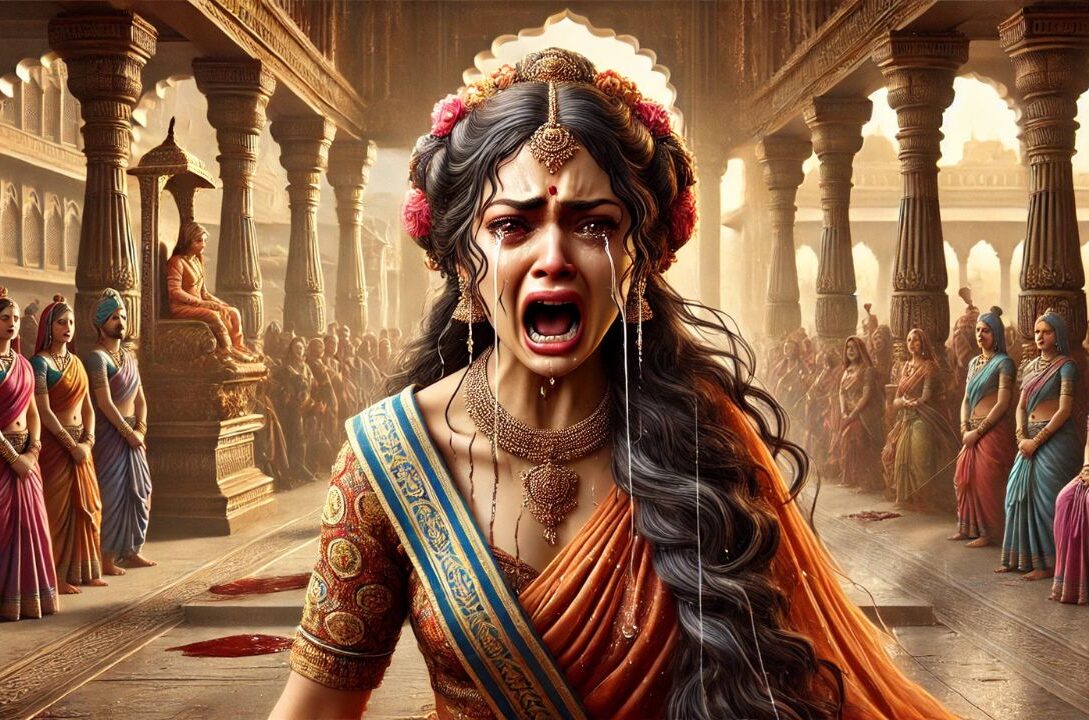
In the great hall of Hastinapura, Draupadi stood surrounded by men she thought would protect her. But as Dushasana pulled at her saree, trying to strip her dignity, she realized that no one would rise for her—not even her own husbands. Her cries for help echoed in the court, but they were met with silence.
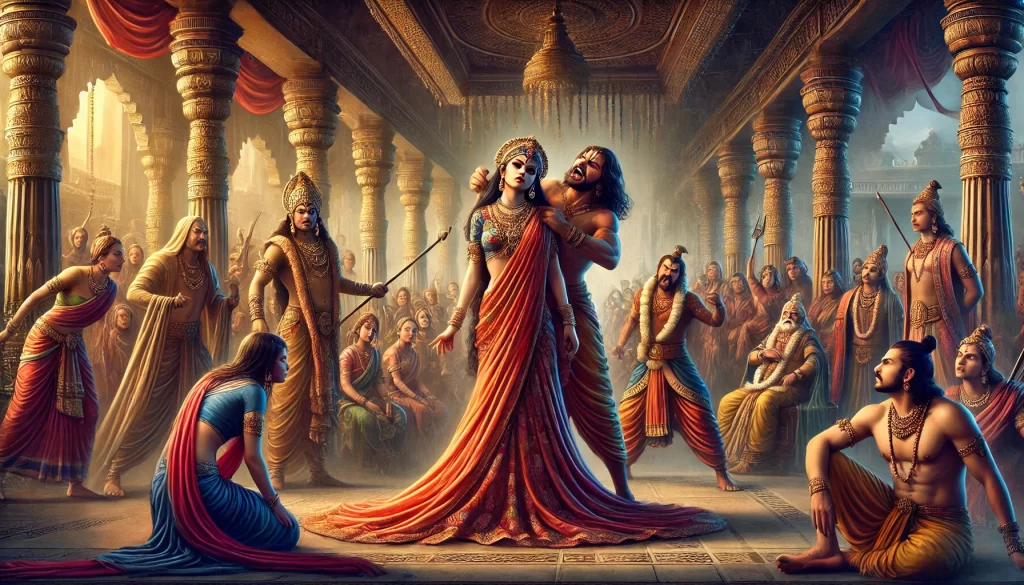
Her heart pounded as she looked at the Pandavas, her protectors. They sat with their heads bowed, their lips sealed. Her voice trembled with disbelief as she asked:
“किं पतिः रक्षको न स्यात्?”
(“Is a husband not meant to protect his wife?”)
Her words hung in the air, unanswered.
She turned to Yudhishthira, the one who had gambled her away. “Why?” she asked, her voice breaking. “How could you stake me after you had already lost yourself? Did you ever see me as a person, or was I just another thing for you to wager?”
Yudhishthira could not look at her. He sat frozen, bound by his idea of dharma. But what dharma allowed a woman to be humiliated while her protectors stayed still?
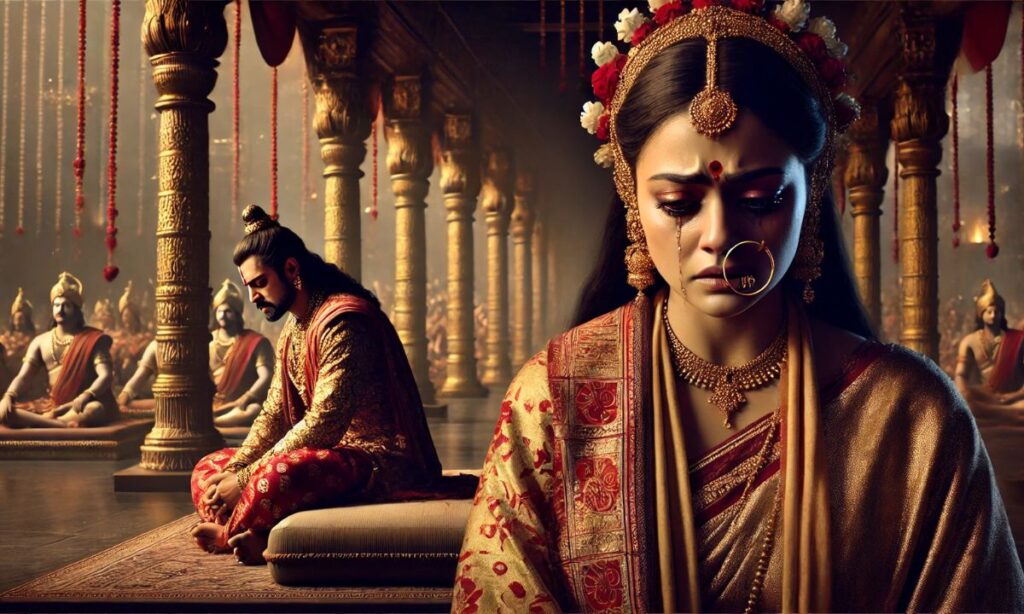
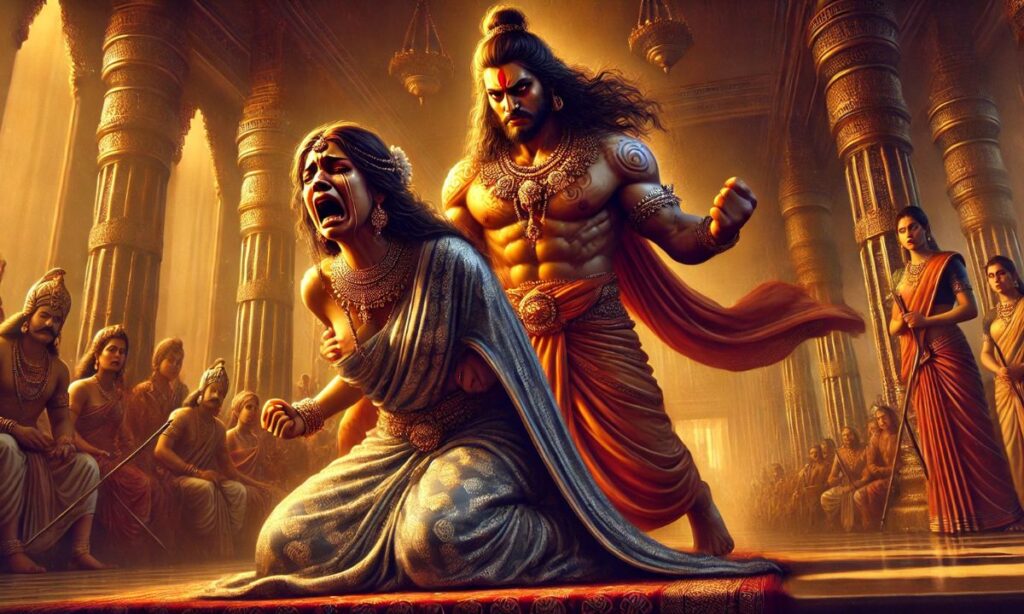
Draupadi’s gaze shifted to Bhima, the strongest of them all. His fists were clenched, his face red with anger, but he did nothing. She screamed, “Bhima! You roar like a lion in battle, but today, when I am being dishonored, you sit like a stone! Is this the strength I believed in?”
Later, when the moment had passed, Bhima swore vengeance. He roared that he would drink Dushasana’s blood and break Duryodhana’s thigh. But Draupadi’s face was cold when she heard him. “Where was this rage when I needed it? Your promises now mean nothing. The moment is gone.”
Draupadi turned to Arjuna, the greatest archer in the world. “Arjuna,” she said, tears streaming down her face, “was your Gandiva too heavy today? You have fought for kingdoms, for pride, for glory—but not for me? Am I not worth your fight?”
Arjuna’s head dropped. “I will make this right,” he whispered, but his words felt hollow. Draupadi’s heart was already broken.
She looked to Nakula and Sahadeva, her youngest husbands, hoping for even a word. They were her gentlest protectors, but even they sat frozen. “Did my tears not move you?” she asked. “Did my cries not reach your hearts?”
The brothers said nothing. Their silence was louder than any words they could have spoken.
As her saree unraveled, Draupadi lifted her hands to the heavens. Her voice, now filled with despair, called out:
“हे केशव, रक्षा करो!”
(“O Krishna, save me!”)
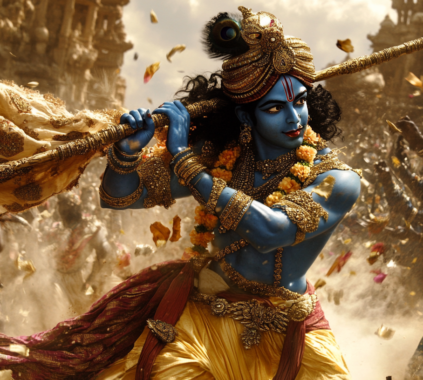
When no one on earth stood for her, she turned to the divine. Krishna answered her call, protecting her honor, but the scars of that day remained.
After the ordeal, the Pandavas swore they would avenge her. Bhima roared. Arjuna promised. Nakula and Sahadeva bowed their heads in shame. But Draupadi’s words cut through their vows like a blade:
“Your promises now are useless. The court where I stood alone, humiliated, is gone. My tears have dried. Your silence in that moment is what I will never forget.”
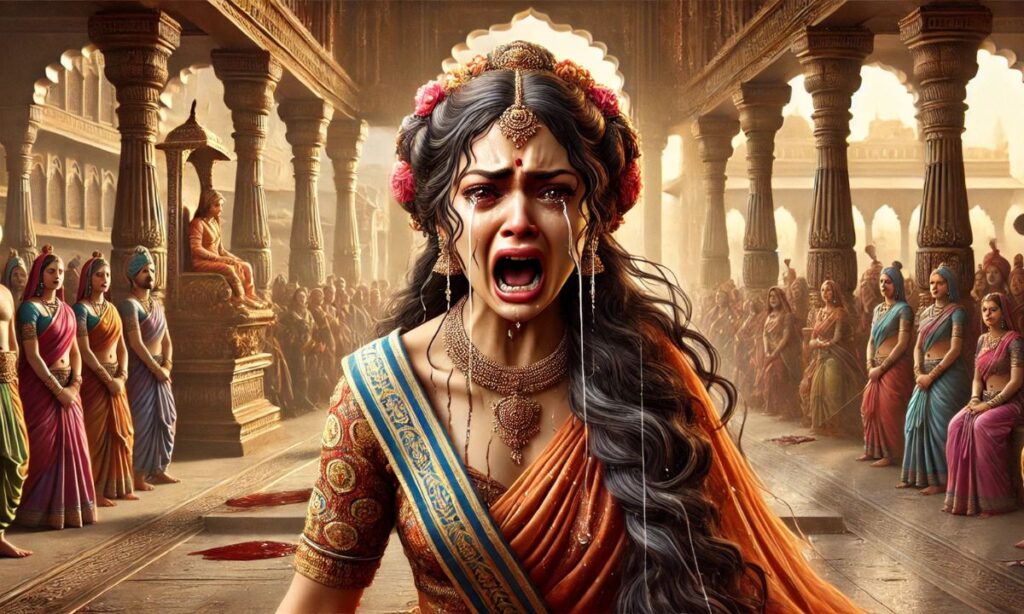
Draupadi’s story is not just one of betrayal. It is a question for all of us. If we were in that court, would we have stood by her—or stayed silent like the Pandavas?
What does loyalty mean if it doesn’t show up when it matters most? What does courage mean if it waits for the right moment to act?
What does it mean to be a protector? Is protection about shouting promises after the fact, or is it about standing up when it matters most? Bhima’s vows of vengeance were dramatic, but they came too late. Draupadi’s humiliation was not just an attack on her dignity; it was an indictment of the silence of those who should have defended her.
Ask yourself:
- Would you have stayed silent in that court?
- When someone you love is wronged, do you act immediately, or do you wait until it is convenient to fight back?
- What is dharma if it allows injustice to unfold before your eyes?
A Shloka to Reflect On
Draupadi’s anguish echoes in the timeless wisdom of the Bhagavad Gita:
“न कर्तव्यमुपेक्षेत धर्मं प्रति समाहितः।”
(“One must never overlook dharma, especially when it is under attack.”)
But on that day, dharma failed Draupadi. Or perhaps, it was not dharma that failed—it was the people who let it fall. Ask yourself: If you were there, would you have stayed silent?