अश्वत्थामा हतः कुञ्जरः
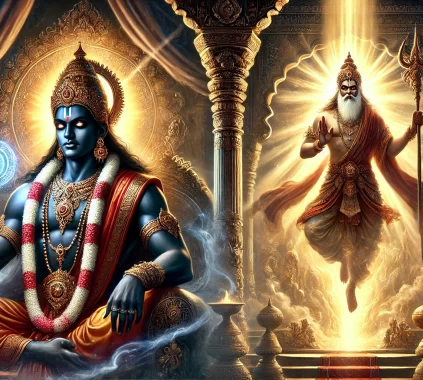
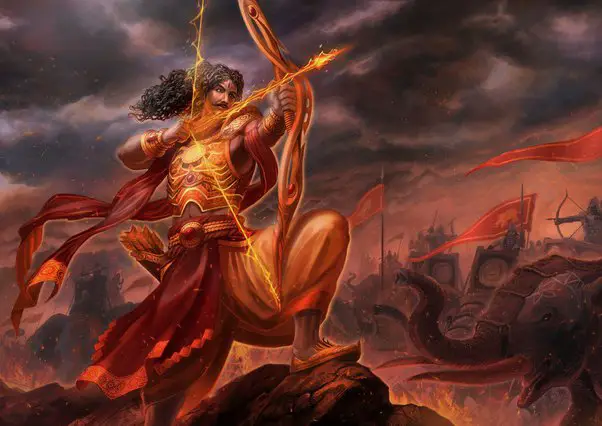
The Mahabharata is full of ethical dilemmas, where dharma (righteousness) is often shrouded in shades of grey. Nowhere is this more evident than in the Kurukshetra war, where Lord Krishna’s street-smart tactics navigate the fine line between right and wrong. One such moment is the strategic deception around the death of Ashwatthama, which demoralized Guru Dronacharya, the Kaurava commander.
Krishna didn’t let Yudhishthira, the paragon of truth, utter a lie, yet he ensured Drona’s defeat. Bhima killed an elephant named Ashwatthama, and Yudhishthira proclaimed, “Ashwatthama is dead… the elephant.” The conch shells drowned out the last words. This broke Drona’s will, making him vulnerable. Was it ethical? Was it dharmic? This incident underlines a key truth of Hindu philosophy: dharma is nuanced and situational, not rigid.

The Multifaceted Nature of Dharma
‘1. Sanatana Dharma (Eternal Dharma)
Sanatana Dharma refers to the universal and eternal principles that govern the cosmos and life itself. It encompasses values like truth, non-violence, compassion, and justice. These principles are timeless and apply universally to all beings. Unlike specific duties tied to roles, it reflects the essence of righteousness and cosmic order. A classic example is the pursuit of dharma, artha, kama, and moksha—the four purusharthas (life goals), which together uphold the balance of life.
2. Svadharma (Personal Dharma)
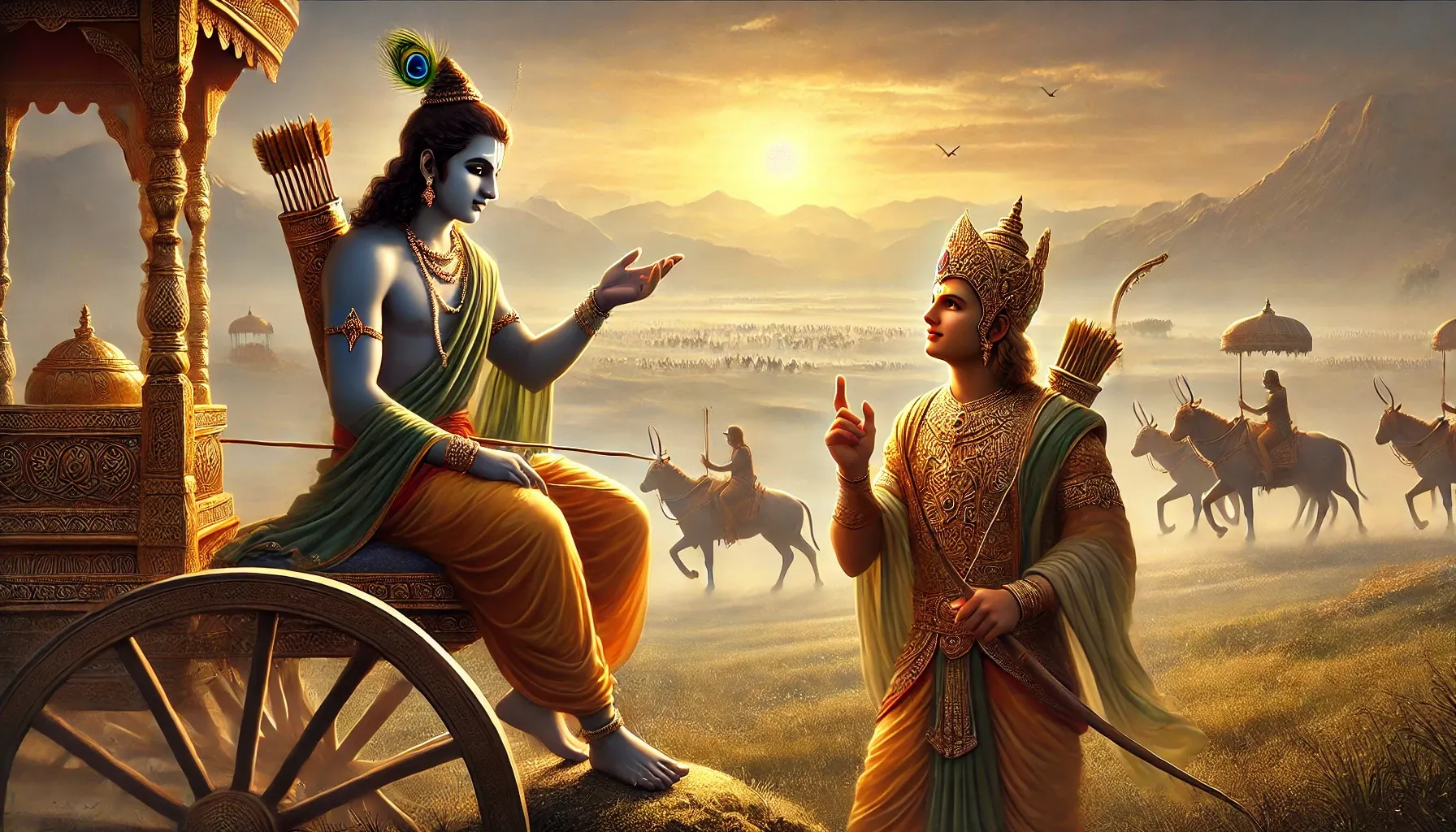
Svadharma is an individual’s duty, determined by their nature, role, and life circumstances. It varies based on caste (varna), life stage (ashrama), and personal disposition (guna). Arjuna’s dilemma in the Mahabharata, resolved by Krishna, exemplifies svadharma. Krishna urged Arjuna to fulfill his duty as a warrior (Kshatriya) to fight for justice, even when it conflicted with his emotions.
3. Varnashrama Dharma (Social and Life-Stage Dharma)
Varnashrama Dharma defines duties based on societal roles and life stages.
- Varna: Duties of Brahmanas (priests), Kshatriyas (warriors), Vaishyas (merchants), and Shudras (service providers).
- Ashrama: Duties of life stages—Brahmacharya (student), Grihastha (householder), Vanaprastha (retirement), and Sannyasa (renunciation). This framework ensures societal harmony and spiritual growth.
4. Yuga Dharma (Age-Specific Dharma)
Yuga Dharma adapts dharma to the moral and spiritual conditions of the epoch (Yuga).
- In Satya Yuga, dharma prevailed entirely.
- By Kali Yuga, it declines to 25%, with deceit and materialism dominating.
Krishna’s strategic use of deception in the Mahabharata reflects Yuga Dharma, where adherence to dharma requires flexibility to suit the age’s realities.
5. Apad Dharma (Emergency Dharma)
Apad Dharma allows for exceptions during crises, where survival or extraordinary circumstances demand actions that might otherwise be adharmic. Krishna’s strategy to mislead Dronacharya about Ashwatthama’s death to protect dharma illustrates Apad Dharma. It underscores that moral guidelines may shift during emergencies to uphold the greater good.
6. Raja Dharma (Duties of a King/Ruler)
Raja Dharma outlines the responsibilities of rulers to protect and govern their subjects justly. Kings are expected to uphold justice, ensure societal welfare, and maintain law and order. Manusmriti elaborates on these duties. Krishna’s guidance to Yudhishthira during his rule and Rama’s governance of Ayodhya exemplify Raja Dharma.
7. Stri Dharma (Duties of Women)
Stri Dharma traditionally defined the roles of women as daughters, wives, and mothers, emphasizing devotion, nurturing, and sacrifice. However, modern interpretations often highlight autonomy and equality. Examples from mythology include Sita’s unwavering commitment to dharma and Draupadi’s courage in upholding her principles during adversity.
8. Lokasamgraha (Dharma for Collective Welfare)
Lokasamgraha focuses on the collective good, promoting actions that benefit society as a whole. It encourages selflessness and service to maintain harmony and uplift communities. Krishna’s role as a strategist in the Mahabharata embodies Lokasamgraha, ensuring societal welfare even through unconventional means.
9. Atma Dharma (Spiritual Dharma)
Atma Dharma is the duty of self-realization and alignment with the divine truth (Brahman). It emphasizes inner growth through meditation, self-discovery, and spiritual practices. It is beautifully encapsulated in the Bhagavad Gita’s teachings, where Krishna urges Arjuna to focus on his inner connection to the eternal self (Atman).
10. Sadharana Dharma (Common Dharma)
Sadharana Dharma refers to the universal ethical duties that apply to all, regardless of caste, stage, or role. These include virtues like honesty, kindness, non-violence, forgiveness, and self-control. It forms the moral foundation of all other dharmas, ensuring righteousness in daily life.
The Dance Between Dharma and Karma
श्रेयान्स्वधर्मोविगुणःपरधर्मात्स्वनुष्ठितात्।स्वधर्मेनिधनंश्रेयःपरधर्मोभयावहः।।
“Shreyan swadharmo vigunah paradharmat swanushthitat;
Swadharme nidhanam shreyah paradharmo bhayavahah.”
As you can see there are just too many dharmas and hence, to know whether or not you have been acting against one, you really need to think.
Hindu mythology has never been about the fear of god or what god said. There has always been a strong relationship between Dharma and Karma and often the karma is considered more important that the dharma.
Let me try and explain it using the quote shared above which roughly translates to:
It is better to fail in following one’s own dharma than to succeed in following another’s. Performing the duties prescribed by one’s nature, even if imperfectly, is safer and more fulfilling than adopting another’s dharma, which is fraught with danger.
This shloka captures the essence of how dharma and karma must align. Krishna emphasizes that one’s svadharma—the personal duties dictated by their role, nature, and circumstances—is sacred, even if executed imperfectly.
The fulfillment of one’s own dharma, however challenging, is far superior to excelling in duties that belong to another.
For instance, Arjuna’s hesitation to fight in the Kurukshetra war stemmed from a conflict between his emotional attachments and his duty as a Kshatriya. Krishna reminds him that his dharma as a warrior is to fight for justice, even if it means standing against loved ones. Had Arjuna abandoned his dharma, he would have acted against his own nature, leading to inner conflict and spiritual decline.
This principle underscores the relationship between dharma and karma: karma becomes meaningful and righteous only when performed in harmony with one’s dharma. Straying from one’s dharma—no matter how successful the results—leads to chaos and disharmony. True spiritual growth lies in staying rooted in one’s path, regardless of the challenges or imperfections in its execution.
We need to understand that Hindu mythology doesn’t simplify life into binaries of good and bad. Dharma evolves with context. It’s not about divine commandments but about introspection and balance.
A thief stealing to feed his starving family might violate Sadharana Dharma (universal ethics), but could it align with Apad Dharma (emergency ethics)? Hinduism invites us to think critically rather than fear divine retribution.
We’ll explore this in Part 02!
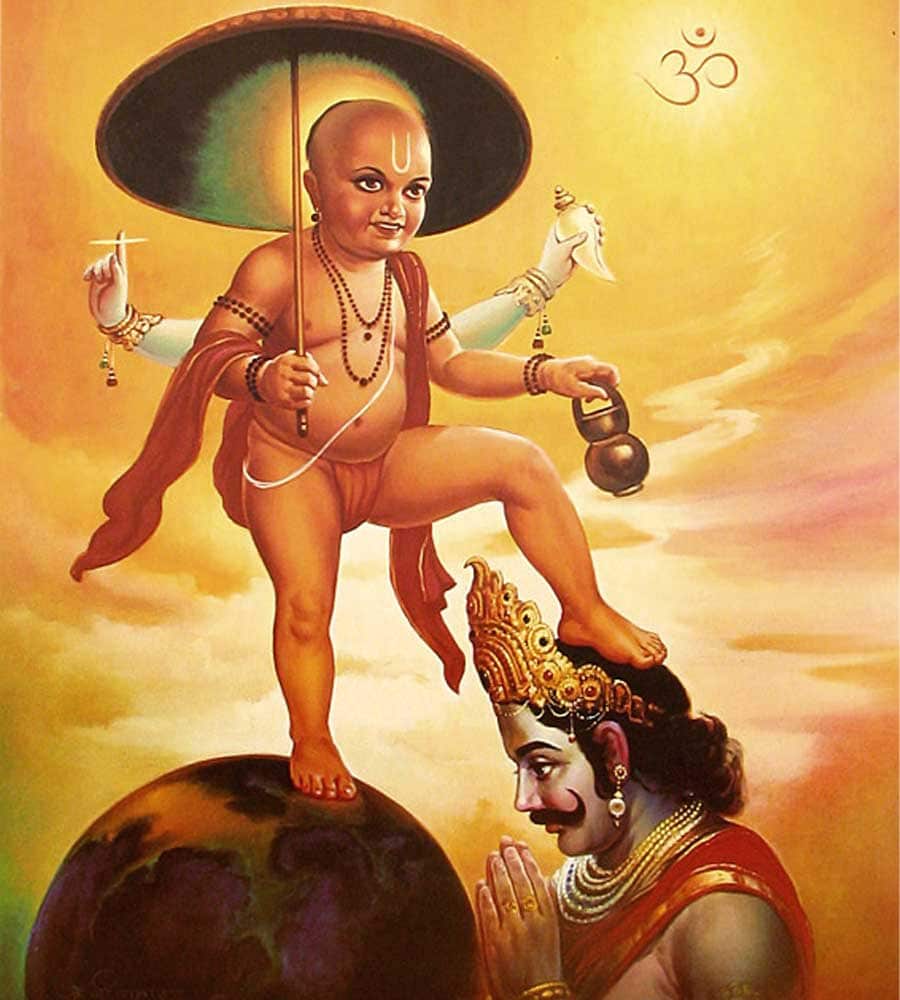
PS: In the next one, I will try and answer the question that I usually get for the Vaman avatar! Why did he “trick” Bali into submission 🙂 Makes me excited to write too!!